

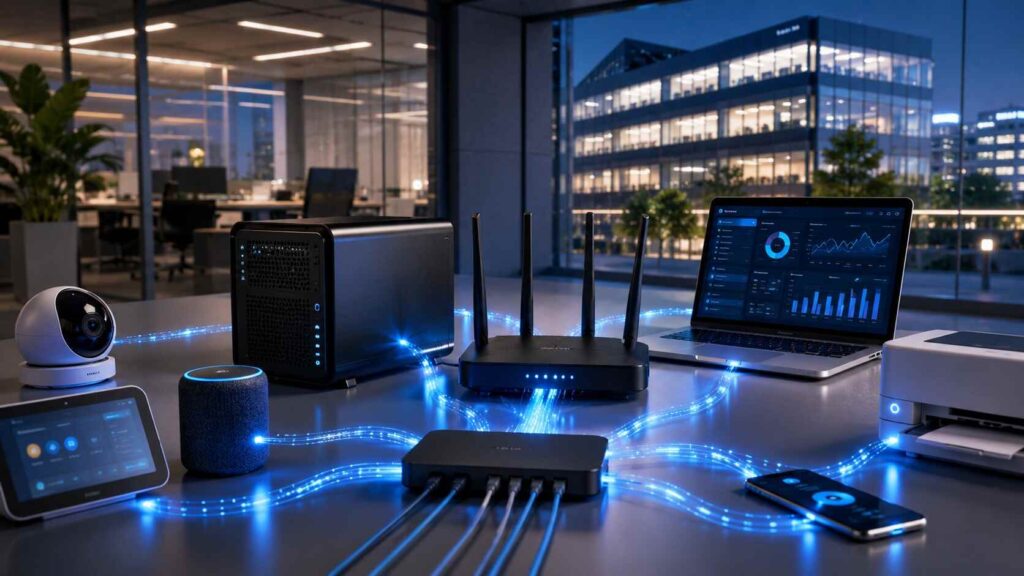
Fhogis930.5z is best understood as a smart computing performance framework, not a confirmed public standard. It helps teams evaluate how connected devices, edge nodes, cloud services, and data pipelines work together to reduce latency, control bandwidth, and keep digital systems responsive under load. That practical view matters more than inflated claims or vague technology labels for real users and operators.
What Is Fhogis930.5z?
Fhogis930.5z describes a practical way to assess smart computing networks. Treat it as a working model for performance planning, not as a guaranteed product name, file type, or certified protocol.
That distinction protects users. When a term has limited public documentation, the responsible move is to explain what it can represent, where it may apply, and what evidence should be checked before trust is given.
In a smart network, devices send data, edge systems process urgent events, and cloud platforms handle storage, analytics, and coordination. fhogis930.5z fits this discussion because performance depends on how those layers cooperate.
Why Performance Comes First
A smart system that responds late is not smart in practice. Users notice slow dashboards, delayed alerts, failed automations, and unstable device connections long before they care about the architecture behind them.
The core performance measures are latency, bandwidth use, throughput, uptime, and error rate. If fhogis930.5z is used as a planning concept, those measures should guide every decision.
The goal is not to make a network sound advanced. The goal is to make it faster, safer, easier to monitor, and more reliable when traffic increases.
How fhogis930.5z Supports Smarter Networks
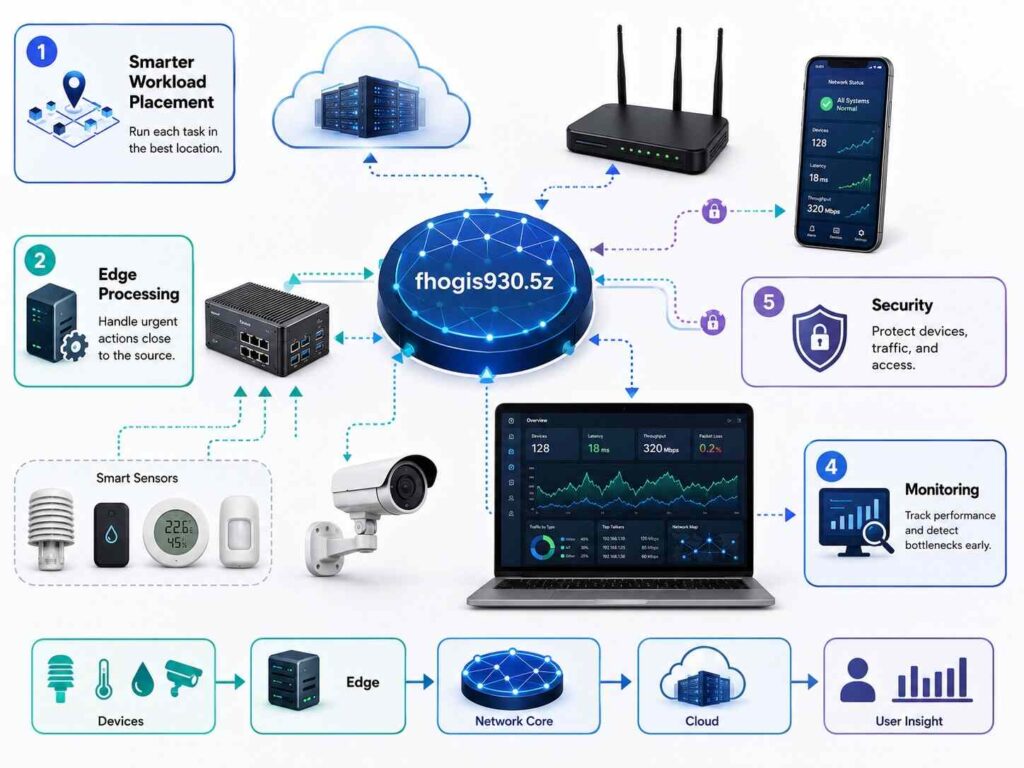
A useful fhogis930.5z approach starts with workload placement. Urgent tasks should run close to the source of data, while heavy analytics and long-term reporting can stay in the cloud.
For example, a smart building should not wait for a distant server to approve every lighting, access, or sensor decision. Local processing can reduce response time and prevent unnecessary traffic from flooding the network.
The same logic applies to industrial sensors, logistics platforms, healthcare monitoring, and real estate automation systems. fhogis930.5z becomes valuable when it helps teams decide which data should move, which data should stay local, and which events need immediate action.
Comparison: Weak vs Optimized Smart Computing Network
| Area | Weak Network Design | Optimized fhogis930.5z Approach |
|---|---|---|
| Latency | 1.2s response time (Cloud-heavy routing) | 30ms to 80ms response (Local edge control) |
| Bandwidth | Raw data moves constantly | Data is filtered, compressed, and prioritized |
| Reliability | One failure slows the whole system | Local fallback keeps key functions active |
| Security | Access rules are inconsistent | Identity, encryption, and logging are enforced |
| Monitoring | Problems appear after users complain | Metrics expose bottlenecks early |
This comparison matters because performance is not a single setting. fhogis930.5z works best as a decision framework across routing, processing, storage, and monitoring.
Practical Optimization Steps
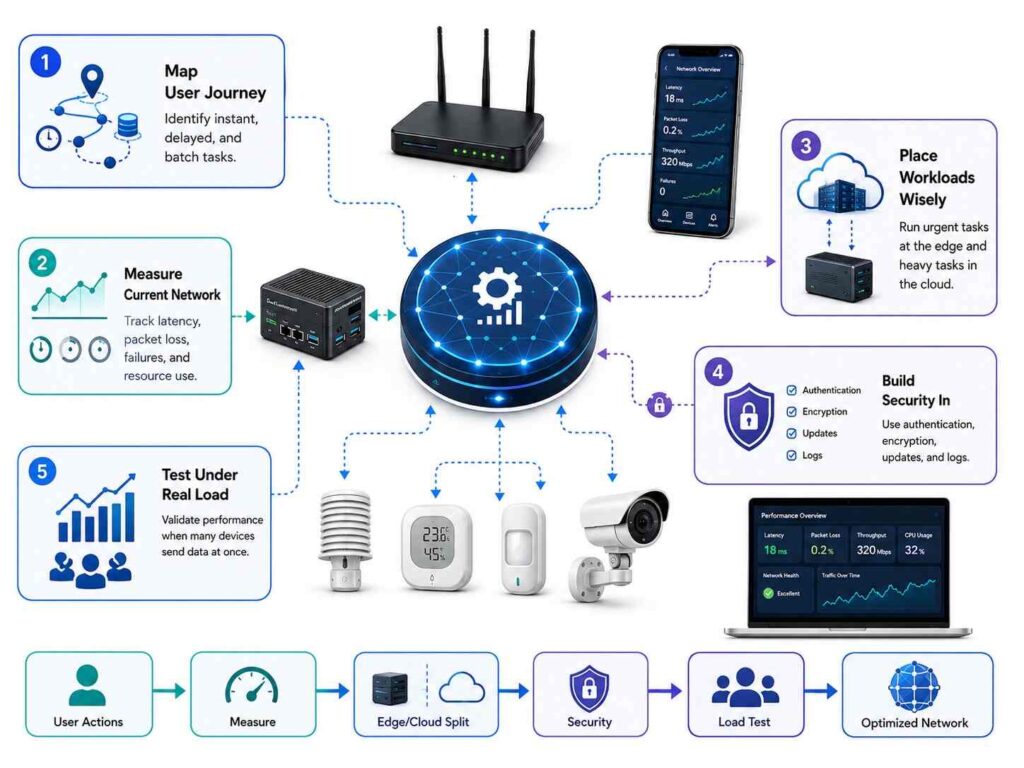
Start by mapping the user journey. Identify which actions must happen instantly, which can tolerate delay, and which only need batch processing.
Next, measure the current network. Track average response time, peak latency, dropped packets, device disconnects, API failures, and resource use during busy periods.
Then decide where each workload belongs. fhogis930.5z should push time-sensitive decisions toward edge processing and reserve cloud resources for heavier, less urgent tasks.
Security must be built into the same plan. Use device authentication, encrypted traffic, access control, update checks, and activity logs without adding unnecessary friction to the user experience.
Finally, review the system under real load. A network that performs well in a quiet test may fail when hundreds of devices send data at once.
Also Read: ISP Throttling: How to Detect If Your Internet Is Slowed
Where the Model Applies
Smart buildings are a clear use case. Lighting, HVAC, occupancy sensors, access control, and energy systems all depend on fast, coordinated data movement.
Real estate technology teams can also use fhogis930.5z as a planning lens for property automation. The focus should be tenant comfort, lower operating cost, safer access, and fewer service interruptions.
Business automation networks benefit when alerts, payments, inventory signals, and customer workflows are prioritized correctly. The best system is not the one with the most tools; it is the one that keeps critical work moving.
Risks and Trust Checks
Do not download or run anything labeled fhogis930.5z without verifying the source. Unknown identifiers, packages, or files should be checked against vendor documentation, internal logs, and security controls.
Do not accept broad claims without metrics. Ask for response-time data, uptime records, integration details, and security documentation.
Do not publish thin content around the term just to capture search traffic. Helpful content should clarify uncertainty, answer real user questions, and provide practical evaluation steps.
Final Takeaway
fhogis930.5z is most useful when treated as a disciplined performance model for smart computing networks. Its value comes from better workload placement, edge processing, cleaner data flow, stronger monitoring, and responsible security controls.
For users, the practical test is simple. The framework demonstrates genuine utility if it accelerates system response times, maintains stability under peak workloads, and safeguards data without disrupting daily operational workflows. If it only adds jargon, it should be challenged.
FAQs
What does it mean?
fhogis930.5z is best treated as a smart computing performance concept or identifier until verified documentation proves a narrower meaning.
Is it a software product?
Not by default. It should not be assumed to be a product, protocol, or safe file without a trusted source.
How can it improve network performance?
It can guide decisions about edge processing, workload placement, bandwidth control, monitoring, and secure data flow.
Who should care about it?
Technical teams, smart building operators, real estate technology managers, and businesses running connected devices should care when performance and reliability matter.
