
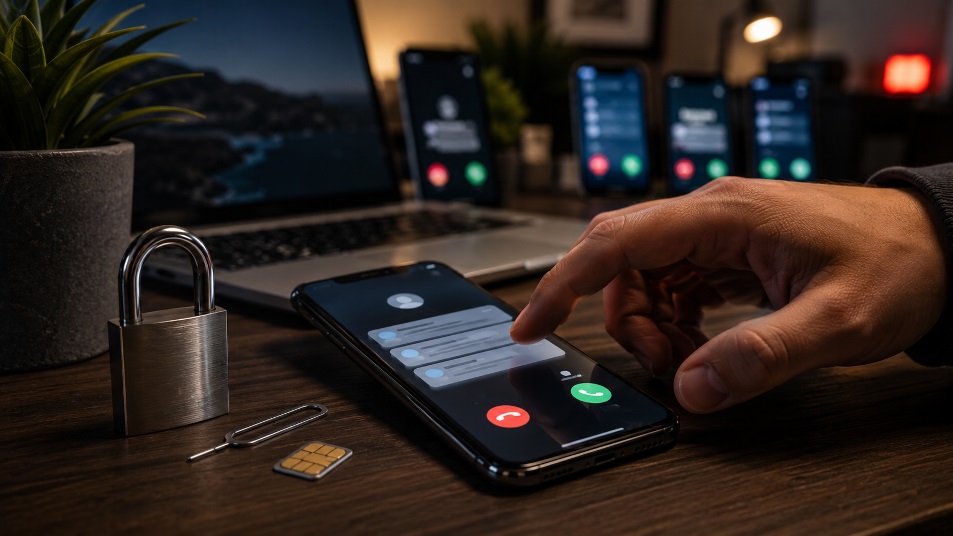
To protect your number online, limit where you share it, avoid unclear consent forms, use call filtering, and report unwanted calls or texts. Spam usually starts when a phone number is entered into quote forms, public profiles, giveaways, lead pages, or unsafe apps. Once exposed, it can move through marketers, data brokers, scammers, or automated dialers. If someone misuses your number, do not retaliate or engage with suspicious callers. Save evidence, block repeat contacts, report abuse, and tighten your phone-number privacy before the problem spreads across more call lists.
- Why Spam Calls and Texts Start
- How Your Number Gets Exposed Online
- Comparison: Risky Behavior vs. Safe Protection
- What To Do If Your Number Was Misused
- How To Protect Your Number Before It Spreads
- Why Submitting Property and Service Inquiries Requires Extra Caution
- When Spam Becomes Harassment
- Final Thoughts
- FAQs
Why Spam Calls and Texts Start
Most people do not knowingly ask for spam. They enter a phone number once, then wonder why several unknown callers start reaching out within hours.
This often happens after using online quote forms, property inquiry pages, insurance tools, coupon sites, free trials, sweepstakes, moving estimates, or app signups. Some pages collect numbers directly. Others pass contact details to partners or lead buyers.
Searches around spam-call signups often come from concern, curiosity, or frustration. Some users want to know why their phone is ringing nonstop. Others suspect someone entered their number without permission.
The clear rule is firm: using another person’s number to trigger unwanted calls or texts is not harmless. It can become privacy abuse, harassment, or evidence in a formal complaint.
How Your Number Gets Exposed Online
Your phone number can leak through ordinary online behavior. Real estate forms, mortgage calculators, contractor quote pages, job boards, public resumes, classified ads, and social media profiles are common sources.
The risk increases when a form uses broad consent language. Phrases such as “marketing partners,” “affiliates,” “automated calls,” “SMS consent,” or “not required as a condition of purchase” deserve close attention.
A legitimate company should explain who may contact you and why. A weak lead page pushes you to submit fast while hiding important contact terms in small print.
Phone-number exposure is not always instant fraud. Sometimes it is a chain: one form, several partners, repeated calls, then spoofed numbers that make blocking harder.
Comparison: Risky Behavior vs. Safe Protection
| Situation | Risky Action | Better Response |
|---|---|---|
| Someone annoys you | Entering their number into call forms | Block, document, and report |
| Your phone gets flooded | Answering every unknown caller | Let calls go to voicemail |
| You need quotes online | Using your main number everywhere | Use a secondary number |
| You receive spam texts | Clicking links or replying fast | Block, report, and verify separately |
| Calls continue after blocking | Trusting one blocked number | Use layered filtering |
What To Do If Your Number Was Misused
If your number suddenly receives many calls or texts, act quickly but stay controlled. Do not answer every call. Do not press buttons during robocalls. Do not reply to suspicious texts.
Save call logs, screenshots, voicemails, sender names, dates, and message content. This record helps if you need to report abuse to a carrier, platform, regulator, or local authority.
Block repeated numbers, but do not rely on blocking alone. The number appearing on your screen is seldom the real source, as automated dialers regularly spoof caller IDs and switch numbers to bypass blocks.
Report unwanted traffic through your mobile carrier, or learn how to block unwanted calls effectively using built-in system tools. Reporting helps identify repeat offenders and larger spam patterns.
How To Protect Your Number Before It Spreads
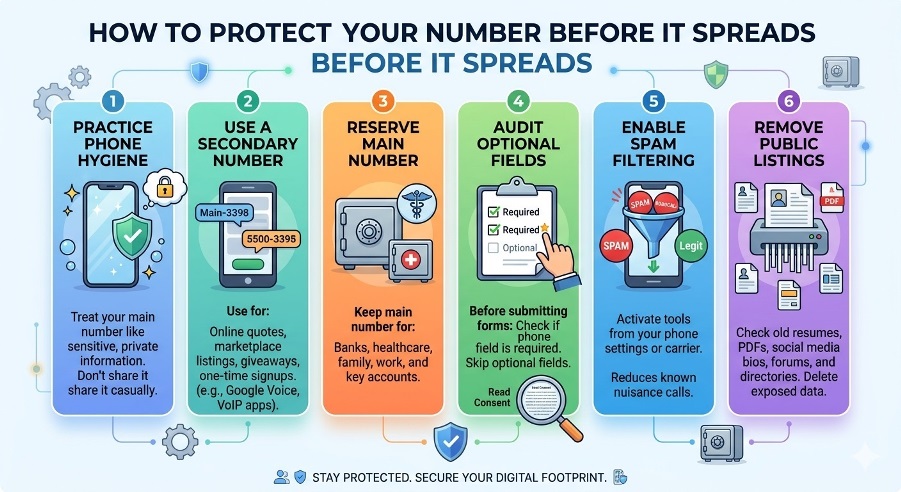
The strongest defense is phone-number hygiene. Treat your main number like private information, not a casual form field.
Use a second number for online quotes, marketplace listings, giveaways, downloads, and one-time inquiries. Keep your main number for banks, healthcare, family, work, and important accounts.
Before submitting any form, check whether the phone field is required. If it is optional, leave it blank. If it is required, read the consent language first.
Remove your number from public pages when possible. Check old resumes, PDFs, classified ads, social media bios, business directories, review profiles, and forum accounts.
Enable spam filtering through your phone or carrier. These tools are not perfect, but they can reduce known robocalls, suspicious texts, and repeated nuisance numbers.
Register your number with a recognized Do Not Call system where available. It may reduce compliant telemarketing, but it will not stop scammers, spoofed calls, surveys, or every unwanted contact.
Why Submitting Property and Service Inquiries Requires Extra Caution
Real estate, mortgage, insurance, solar, moving, and home-service forms are high-value lead sources. One request can create several follow-up calls because multiple companies may compete for the same lead.
This does not mean every company is unsafe. Many businesses contact users only after clear permission. The problem starts when consent is vague, bundled, or shared too broadly.
If a form does not clearly say who will call, how often, and how to opt out, use caution. A clean business makes contact terms readable before asking for your number.
Also Read: How to Sign Up for Spam Calls: Easy Steps Guide
When Spam Becomes Harassment
Spam becomes more serious when calls are excessive, targeted, threatening, or tied to someone intentionally using your number without consent.
Watch for sudden call floods, repeated verification codes, messages using your real name, or companies claiming you requested information you never asked for. These patterns deserve documentation.
Do not copy the behavior by entering someone else’s number into unwanted call systems. That can expose you to complaints and make your position weaker.
This article is for privacy protection and consumer education only. It should not be used to harass, impersonate, threaten, or trigger unwanted calls or texts to any person.
Final Thoughts
Your phone number should not be treated like disposable data. Share it only when the reason is clear, the company is trustworthy, and the consent terms are readable. Before you sign up for spam calls unknowingly through risky forms or vague lead pages, use a secondary number, remove public exposure, filter unknown traffic, and report abuse. The safest response is direct, lawful, and consistent: protect your number before spam systems reach it.
FAQs
Can someone enter my number into call forms?
Yes, but that does not make it acceptable. Save records, block repeat callers, and report unwanted contact when it becomes persistent.
Why do spam calls continue after I block numbers?
Many callers rotate numbers or spoof caller ID. Blocking helps, but filtering, reporting, and privacy control work better together.
Should I use my real number for online quotes?
Use your main number only with trusted companies. For broad quote forms, use a secondary number.
Does a Do Not Call list stop all spam?
No. It can reduce compliant telemarketing, but scammers, spoofed calls, and some non-sales calls may continue.
