
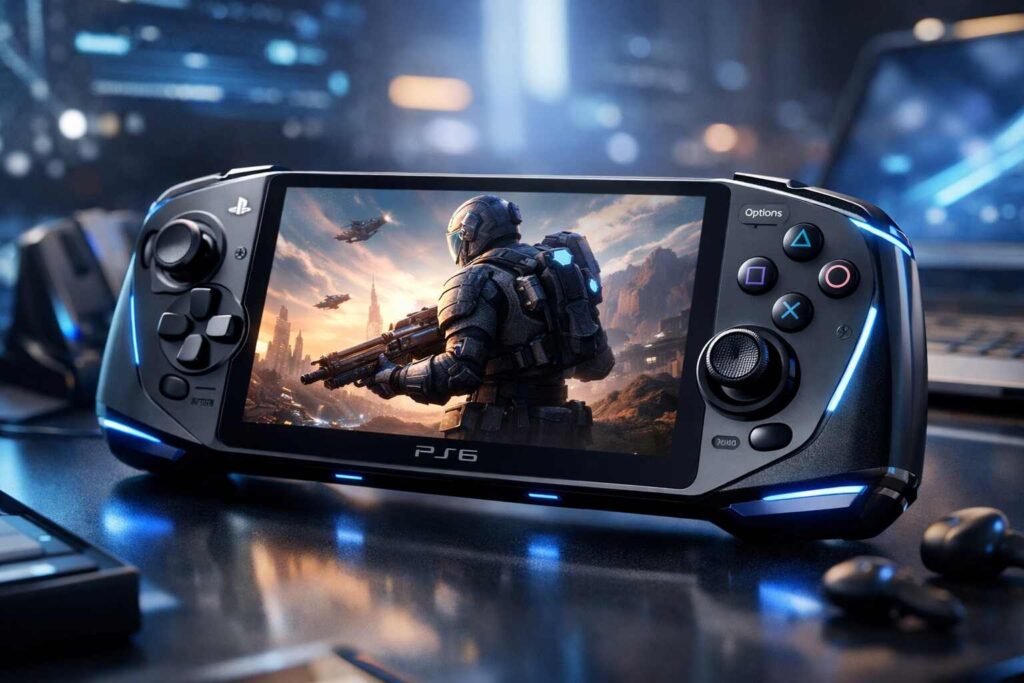
The PlayStation Blog statement by Sony in July 2026, stating the end of manufacturing physical products, signals the change in expectations of consoles worldwide. Post Sony’s announcement, the PS6 lack of optical disc drive became a key component of the roadmap from a mere hypothesis to an important aspect of digital consoles. This means that the PlayStation 6 form factor is aimed at making the console portable and modular, while the emphasis is made on cloud service connectivity.
What Sony officially announced
Sony made clear timetables and incentives for the upcoming PlayStation 6 console generation: all first-party games will use the digital-first principle, PS6 digital-only games will become the flagship product, and PS6 subscription packages will expand to include cloud subscriptions. The vision Sony has of PlayStation Store is unified management of libraries across multiple devices rather than downloading alone.
Hardware, form factor, and performance
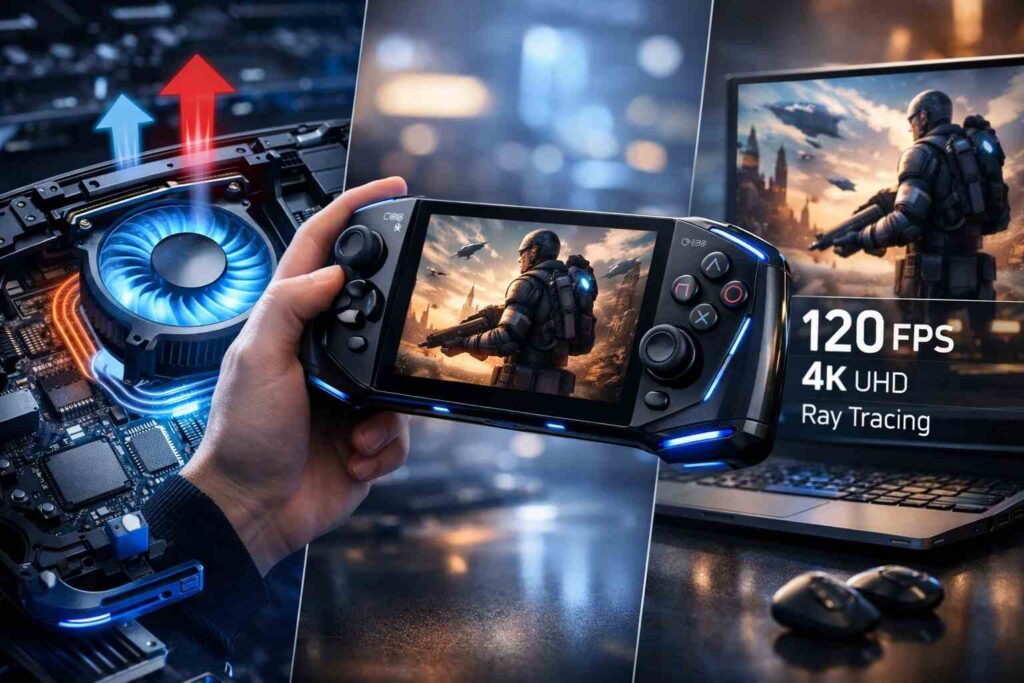
From the recent PS6 hardware leaks in 2026, one can see that there is a clear aim of having an ultimate portable PC experience for the PlayStation. The specifications leaked include a customized system on chip, speedy NVMe storage, and a cooling system. Expect Sony’s handheld PC to resemble the specs of the gaming laptop more than those of the traditional handheld console – its TDP is likely to be higher and vapor chamber is likely to be larger.
Comparison with other handheld PCs
| Feature | PS6 (Sony handheld) | Steam Deck (Valve) | ROG Ally (ASUS) |
|---|---|---|---|
| Exclusive software | Strong first‑party PlayStation lineup and cloud‑streamed exclusives | Limited first‑party exclusives; wide Steam library | Windows PC library + some vendor services; fewer platform exclusives |
| Controller & ergonomics | PlayStation‑style layout, refined haptics expected | Comfortable, built for long sessions; unique trackpads | Xbox‑style inputs on a compact chassis; very ergonomic but varies by model |
| Sustained performance | Tuned SoC, higher TDP for sustained AAA in portable mode | Good for many titles but thermal limits on long AAA runs | High single‑thread performance; aggressive boost behavior |
| Battery life (typical) | Optimized for mixed cloud/locally run play (moderate) | Varies widely by workload (moderate‑low on AAA) | Typically shorter at peak performance, better in balanced modes |
| Cloud & ecosystem | Deep PlayStation cloud integration + subscription bundles | Supports cloud via Steam/third parties; open ecosystem | Windows + third‑party cloud services; flexible but fragmented |
| Storage & upgrades | NVMe primary; emphasis on fast internal storage, modular SSDs likely | User‑replaceable NVMe; good upgradeability | SSD upgradeable (M.2) on most SKUs |
| Price / value (2026) | Positioned with subscriptions to offset hardware cost (rumors) | Broad price tiers; strong value for PC gamers | Premium from OEM; often competitive on raw specs |
| Best for | Players who prioritize PlayStation exclusives and seamless cloud play | PC gamers who want an open ecosystem and modability | Users wanting Windows compatibility and high peak performance |
Summary conclusion: If PlayStation exclusives, cloud-enhanced portable AAA, and subscription services are important factors, then the PS6 handheld is trying to take the lead; Steam Deck is still the top choice for a fully customizable PC handheld, whereas ROG Ally is best suited for those who need pure Windows PC power in their handhelds.
Ownership within digital ecosystems
The change of strategy requires hard policy decisions regarding laws of digital game ownership as well as resale regulations as the industry moves forward with the final days of physical game discs becoming a reality. The provisions about PS6 backward compatibility regarding licensing, cloud restoration and upgrades will determine how collectors perceive collecting physical games as the end of an era.
Security, cloud, and integrations
Cloud gaming integration on PS6 is crucial since Sony will utilize edge streaming to compensate for the reduced storage capacity and allow instant gameplay for digital only PS6 games without large download processes. This way of doing things will increase dependency on the networks but will enhance the value of the Digital console together with PS6 subscription packs and regional caching.
Cost, pricing, and customer experience
Comparing costs of owning a physical and digital console will define consumers’ attitudes towards PS6. According to rumors, Sony is expected to reduce the cost of hardware by omitting optical drives in PS6. However, depending on the frequency of sale and number of subscriptions, long-term costs might look differently.
What this will mean for your PS5 library?
Transition schedules and migration tools have been announced in order to secure your purchases. Actions that will need to be taken in order to protect your library will be licensing transfer, digital upgrade discounts, and temporary cloud restoring. If you have physical discs, check what games can be transferred and store your media safely.
Conclusion
PS6 disc drive removal is more a starting point for further development than a conclusive endpoint – Sony’s mobile approach implies treating consoles as part of the ecosystem, where Sony mobile gaming strategy and cloud services create different business models. The enthusiasts considering PS6 vs Steam Deck comparison and trying to decide between Sony handheld vs ROG Ally will need to compare game libraries, cloud infrastructure reliability, and ways PS6 backward compatibility will protect their legacy purchases. This is a critical moment in time for consumers, developers, and preservationists alike – the PlayStation portable PC performance promises and the end of physical game discs are here to change the way games are developed, distributed, and preserved.
Game developers will face both challenges and benefits – production of smaller consoles without disc drives will be easier, but studios will need to improve patches delivery, modular installation process, and prepare their builds for efficient streaming. Small indies can gain additional visibility within subscription bundles while live services and episodic releases will be perfectly aligned with future PlayStation Store that will operate on subscription model. Preserving professionals should lobby Sony and platform owners to invest in archiving projects because Digital game ownership laws in different regions vary widely; it is crucial to create a formal escrow or repository for master copies. The makers of the accessories will change as well; the producers of the docks, SSD updates, and cooling options will know where their place is in the marketplace, and the comparisons between PS6 and Steam Deck will consider not just FPS, but also depth of the ecosystem. Consumers will require transparent opt-in processes for cloud saves and cross-buy entitlements.
In conclusion, the direction towards the PlayStation portable PC performance and Sony handheld vs ROG Ally and Steam Deck debates define the PlayStation’s role as not only device but service as well. It is better to monitor Sony’s hardware briefings and PlayStation Store updates prior to purchase decisions.
