

page size checker by spellmistake measures a webpage’s total file weight and shows what may be slowing it down. Use it before publishing, after design changes, and when traffic or leads decline. A lighter page loads faster, feels cleaner, and gives users fewer reasons to leave, especially on mobile connections where every extra megabyte matters today for visitors online daily.
What This Tool Actually Checks
page size checker by spellmistake checks the total size of a live webpage. That includes HTML, CSS, JavaScript, images, fonts, video embeds, analytics tags, and third-party files.
Many slow pages do not look heavy. A simple service page can still carry oversized images, unused plugin files, map embeds, and font packages that visitors never asked to download.
The goal is to remove weight that does not help the user read, trust, click, call, book, or buy.
Why Page Size Affects SEO and Leads

Page size is not the same as page speed, but it strongly influences speed. A smaller page usually reaches the visitor faster, especially on mobile data.
If a page delays useful content, hides buttons behind slow scripts, or makes images crawl, users leave. Heavy pages can reduce form fills, call clicks, appointment requests, and property enquiries.
That is why page size checker by spellmistake belongs in a serious SEO workflow.
Practical Audit Example
A property listing page may reach 4 MB from full-size JPEG photos, a map, a mortgage widget, tracking pixels, and unused slider scripts.
After resizing images, converting photos to WebP, lazy-loading the map, and removing unused scripts, the same page can become far lighter without changing the design. That is the type of opportunity page size checker by spellmistake helps expose.
Run the tool, record the page weight, find the heaviest assets, fix the biggest waste, and test again.
Recommended Workflow
Use the tool on your homepage, money pages, posts, and paid landing pages. Test before campaigns, after plugin installs, and after uploading new images.
If you searched for page size checker spellmistake, you probably want a direct way to test webpage weight. Paste the URL, review the result, and save the number before making changes.
Then inspect images, JavaScript, fonts, embeds, and tracking scripts. These are usually the first suspects.
What Good Page Size Looks Like
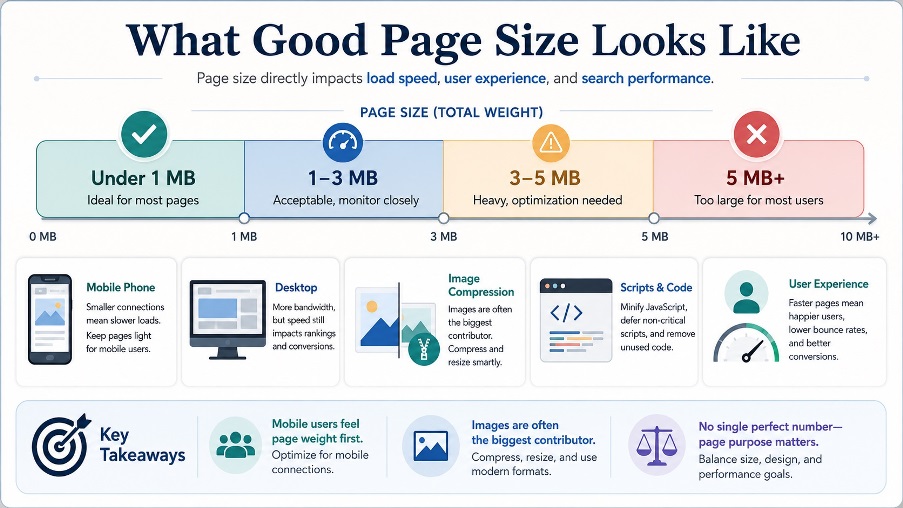
There is no single perfect page size. A contact page, software demo, and real estate listing do not need the same assets.
Still, the rule is firm: if the page feels slow on mobile data, the file weight deserves attention. page size checker by spellmistake gives you the first number, but page purpose should guide the final call.
Comparison: Which Tool Should You Use?
| Tool | Best Use | Decision It Supports |
|---|---|---|
| page size checker by spellmistake | Measure total page weight | Find what makes the page heavy |
| PageSpeed Insights | Review performance signals | Understand user experience issues |
| Lighthouse | Technical page audit | Flag developer-level fixes |
| WebPageTest or GTmetrix | Deeper load analysis | See which files delay rendering |
page size checker spellmistake is useful when the first question is page weight, not a complete performance diagnosis.
How to Reduce Page Size Safely
Start with images. Resize them to the display size, compress them, and use WebP or AVIF where supported.
Next, review JavaScript. Remove unused sliders, duplicate analytics tags, unnecessary popups, and scripts that load where they are not needed.
Then check fonts. Many websites load too many families and weights for little gain. Keep only what supports readability.
Enable compression and caching. These changes reduce loading pressure without changing the page design.
After each major fix, run page size checker by spellmistake again. The before-and-after record proves progress and prevents guesswork.
Also Read: Search Engine Basics: How Search Works and Serves Results
Common Mistakes to Avoid
Do not delete assets blindly. A lighter page that breaks layout, forms, tracking, booking buttons, or product filters is not an improvement.
Do not remove useful visuals just to chase a smaller number. A real estate listing needs strong images. Optimize trust-building visuals; do not strip them out.
Do not rely on page size checker spellmistake alone. Use it as the first diagnostic step, then confirm speed, layout stability, and mobile usability with broader tools.
Best Pages to Test First
Start with pages that affect money: homepage, service pages, pricing pages, property listings, and campaign landing pages.
Use page size checker by spellmistake after theme changes, large uploads, new scripts, or plugin updates.
Conclusion
A strong page loads quickly, respects mobile users, and removes anything that does not support the next action. page size checker by spellmistake gives you the first hard number. Use it to find waste, fix the largest files, and protect revenue pages before speed problems become ranking, traffic, or lead problems.
FAQ
Is page size the same as page speed?
No. Page size is the data loaded. Page speed is how quickly the page becomes useful. page size checker by spellmistake helps control one major speed factor.
How often should I use page size checker spellmistake?
Use page size checker spellmistake monthly for important pages and immediately after design, image, plugin, or script changes.
What usually makes a page too large?
Images are usually first. JavaScript, fonts, videos, map embeds, tracking scripts, and unused CSS are also common causes.
Can a heavy page still rank?
Yes, but it carries risk. If heavy files damage mobile experience, engagement, or conversions, the page becomes harder to defend.
