

If you searched for “blooket bot,” you probably want to know one thing: do these tools actually work, or are they risky internet tricks? The honest answer is that most bot claims sound better than they are. They promise quick wins, fake players, auto answers, and game control, but they can also ruin a classroom game, expose your device to unsafe scripts, and break Blooket’s rules.
This review explains what a Blooket bot is, what people claim it can do, why those claims are misleading, and what students and teachers should do instead.
What Is a Blooket Bot?
A Blooket bot is usually an automated script or third-party tool that tries to interact with a Blooket game without a real player doing the work. Some are promoted as tools that can join games automatically, add fake names, or influence gameplay.
In simple words, it is not a normal Blooket feature. Blooket is designed for review games, homework practice, and friendly competition. A bot changes the purpose from learning to disruption.
What Do Blooket Bot Tools Claim to Do?
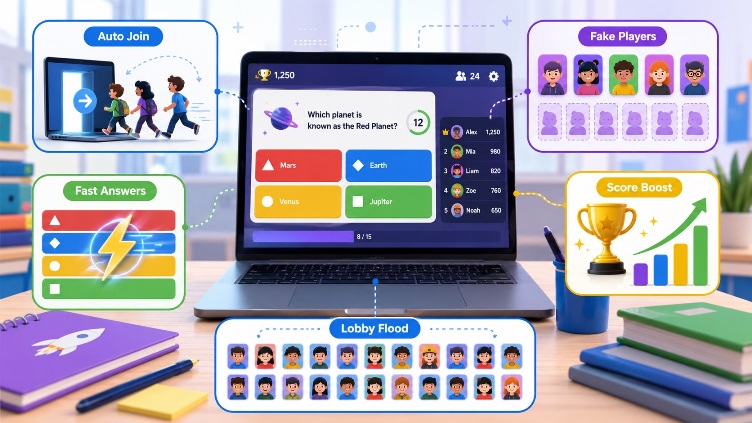
Most bot pages and videos make similar claims. They suggest that a bot can join a live game, flood a lobby, answer questions quickly, or make a student appear better than they really are.
These claims attract attention because Blooket games move fast. Students want to win. Treating a Blooket bot like a harmless joke is a major risk. But in a real classroom, even one person using automation can waste time for everyone. A teacher may need to restart the game, remove fake players, or stop the activity.
A simple rule helps: if a tool promises unfair control or automatic gameplay, it is not a smart shortcut. It is a risk.
Is Using a Blooket Bot Safe?
No, using a Blooket bot is not safe or recommended. The main risks are account problems, school discipline, malware, privacy issues, and loss of trust.
Many bot tools ask users to paste scripts, install extensions, visit unknown websites, or enter a game code into a third-party page. That should raise a red flag. A student may think they are testing a small trick, but they may be giving an unknown site access to browser activity or school network data.
There is also a learning problem. Blooket works best when the score shows what students know. If a bot answers or manipulates the game, the teacher loses useful feedback, and fair players lose motivation.
Better Ways to Use Blooket Without Bots
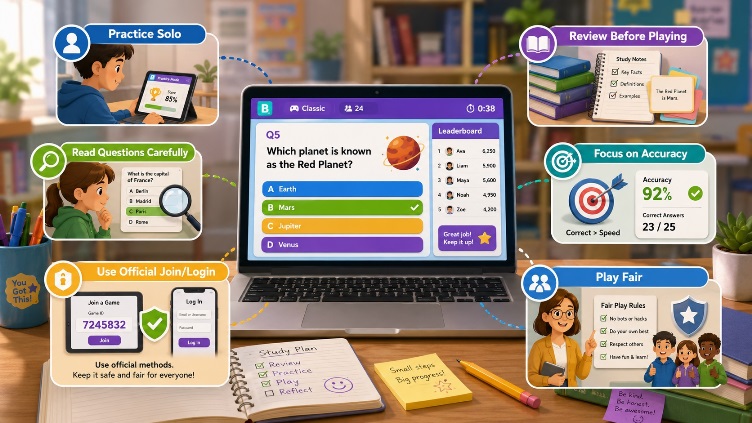
If your real goal is to perform better in Blooket, there are better options. Review the topic before the game if your teacher allows it. Practice in solo mode. Focus on accuracy before speed. Read each question fully instead of guessing too quickly.
For teachers, prevention is better than panic. Explain the rules before starting. Use random names when needed, close late joining after students enter, and watch for unusual nicknames. Choose game modes that fit the lesson, not just the most chaotic option. After the game, review missed concepts so students understand why answers were wrong.
Blooket Join and Blooket Login: What Users Should Know
You do not need a bot to join a normal game. In most live classroom situations, students use Blooket join through a game code, QR code, or join link shared by the host. A Blooket login is useful when a student wants to save progress, use their account, earn points, or access their own Blooks.
If Blooket is not working, a bot will not fix the real issue. Common problems include browser extensions, blocked school network settings, incorrect usernames, or connection errors. The safer move is to check the browser, ask the teacher, or use official help resources.
Also Read: Blooket Login Guide: Student & Teacher Access Help
Conclusion
A Blooket bot may look like a shortcut, but it is not worth the risk. It can disrupt games, damage trust, reduce learning value, and expose users to unsafe tools. Blooket is more useful when students play fairly and teachers set clear rules.
For the next step, read a guide on how to use Blooket join and Blooket login correctly so you can play safely and get the most value from every session.
FAQ
Is a Blooket bot allowed?
No. A Blooket bot is not an official classroom tool. If it automates gameplay, gives an unfair advantage, or disrupts a session, it should be avoided.
Can a Blooket bot get you banned?
It can create serious account and school consequences. Even if a tool claims to be safe, using cheats or automation can break platform rules and classroom expectations.
Do students need a Blooket login to join a game?
Usually, no. Students can often join a live game with the code, QR code, or link from the teacher. Logging in is mainly useful for account features.
