


America’s largest benefits agency is undergoing a quiet technology revolution. Decades-old mainframes, handwritten workflows, and scattered data are being reimagined with artificial intelligence, automation, and cloud platforms. This article explains how that overhaul works in practice, what it means for claimants, and why modernization can’t be postponed any longer today. We explore the underlying architecture, from legacy COBOL systems to new cloud platforms, and the governance required for secure AI implementation.
- What is Social Security Administration
- Why legacy systems are now an AI priority
- From COBOL to cloud: modernizing the core
- Where AI fits in the Social Security stack
- Connecting AI overhaul to payments and public expectations
- Governance, risk, and responsible AI
- What this AI overhaul means for the future
- FAQs
What is Social Security Administration
The social security administration is the federal agency responsible for delivering retirement, disability, and survivors’ benefits to tens of millions of Americans every month. Behind those payments sits one of the largest and oldest technology footprints in government, with core processes still running on mainframe systems and COBOL code written decades ago.
Why legacy systems are now an AI priority
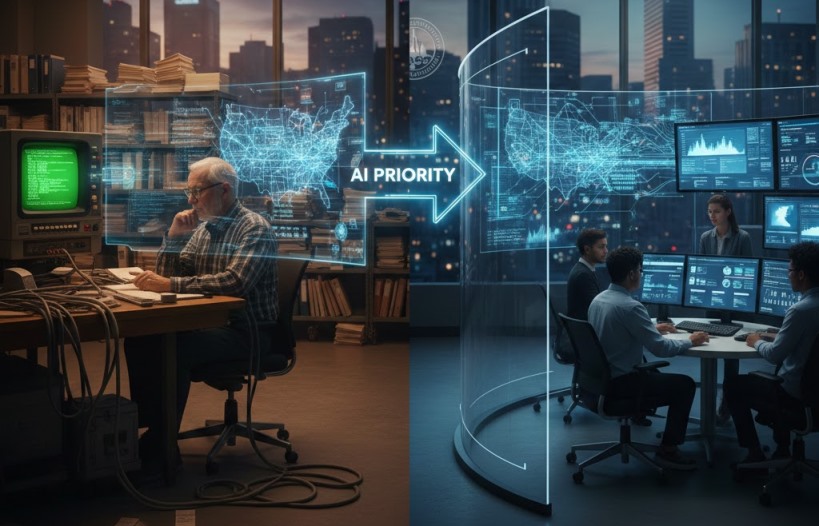
For years, SSA’s modernization work focused on upgrades that kept services running: new hardware, limited cloud moves, and better web portals. Recent initiatives, however, show a clear shift toward using artificial intelligence to streamline workloads—especially around hearings, case analysis, and decision support—while modernizing the underlying platforms.
In this context, a “legacy system AI overhaul” means using AI as a catalyst to redesign how claims are processed, how data flows across systems, and how staff interact with tools day to day. Rather than bolting AI on top of fragile code, the goal is to let AI and modernization move together so the technology stack becomes more flexible, observable, and secure over time.
Official IT plans and independent reviews repeatedly highlight the same pain points: technical debt, cybersecurity exposure, and an urgent need to integrate legacy applications with flexible cloud-based services. That is why ssa it modernization is now central to protecting benefits, improving customer experience, and keeping the program sustainable.
From COBOL to cloud: modernizing the core

Most core benefit systems were built when batch jobs and green-screen terminals were state of the art. Today, those platforms make it hard to scale services, adopt modern analytics, or expose real-time data to digital channels. An AI-centric strategy usually starts with legacy systems modernization—documenting what the old code actually does, exposing stable interfaces, and deciding which components can safely move into more modular architectures.
In practice, that often means a combination of cobol modernization, API layers over mainframe applications, and carefully planned mainframe modernization projects that preserve critical business logic while shifting workloads toward elastic cloud infrastructure. AI-assisted analysis tools can help engineers understand large legacy codebases and map where policy rules live, reducing the risk of breaking benefit calculations when systems are refactored.
Cloud-ready architectures also make it easier to deploy AI models at scale. Many agencies pair government it modernization with efforts to centralize data pipelines and strengthen access controls before rolling out machine-learning workloads that touch sensitive claim information. Across ai in federal government programs, modernization and AI increasingly move together.
Also Read: Pedrovazpaulo Business Consultant: AI & Digital Strategy
Where AI fits in the Social Security stack
AI can support the Social Security business in several concrete, high-impact ways.
First, AI systems can assist adjudicators and reviewers. SSA has explored tools that flag inconsistencies, highlight missing evidence, and compare draft decisions against past outcomes, helping staff focus attention where the risk of error is highest. That kind of ai modernization tools use historical patterns to prioritize work without replacing human judgment.
Second, conversational tools are reshaping the front line. Generative models already power internal chatbots that answer complex policy questions for employees or summarize long case files, and pilots are under way across government to make similar tools available to the public for guided self-service. Externally, AI-driven virtual assistants can help people find status updates, understand forms, or navigate self-service options, while reducing call-center backlogs.
Third, AI supports program integrity. Modern analytics allow ai-powered fraud detection to surface unusual patterns in claims, routing the riskiest items for human review. Combined with cloud migration for legacy systems, these capabilities enable near real-time monitoring instead of relying only on batch-based audits months later.
Connecting AI overhaul to payments and public expectations
For the public, the clearest measure of success is simple: benefits must arrive accurately and on time. That is why any overhaul has to protect the reliability of every social security payment even as systems are being modernized. AI can help by predicting workload spikes, optimizing staffing, and automatically flagging potential processing bottlenecks before they delay benefits.
Payment-related analytics also support planning and communication. As new policies are implemented and schedules change, data-driven tools help the agency forecast who will be affected and tailor outreach campaigns. That is crucial as people search online for terms like social security payment schedule 2025 or track december ssi payments during the holiday season, expecting clear, authoritative explanations from official channels rather than rumors or outdated posts.
Because the topic is highly visible, modernization work often shows up in social security news today, even when most of the complexity is under the hood. Explaining what AI is actually doing—and equally, what it is not doing—is essential to maintaining public trust.
Governance, risk, and responsible AI
Modernizing critical public-sector systems is never just a technical exercise. An AI-enabled overhaul must be grounded in strong governance: clear accountability, transparent model documentation, robust testing, and continuous monitoring for bias and drift. For an agency like social security administration (ssa), that also means strict privacy protections, tight data-access controls, and careful human-in-the-loop review on any system that could influence eligibility or payment amounts.
Project success depends on cross-functional teams. Legacy subject-matter experts, data scientists, security professionals, and operations staff need a shared roadmap that connects AI pilots to concrete business outcomes and to the realities of policy and operations on the ground. Many agencies are adopting federated centers of excellence so that lessons from one AI deployment can accelerate the next.
What this AI overhaul means for the future
A thoughtful transformation of legacy platforms guided by AI is not about chasing buzzwords; it is about making sure core systems can keep up with demographic change, policy updates, and rising service expectations. By pairing modern architectures with artificial intelligence for government services, SSA can shorten processing times, reduce backlogs, and free staff to focus on complex, human-centered work instead of repetitive tasks.
Done well, the overhaul will be largely invisible to beneficiaries. People will simply experience clearer communication, faster resolutions, and steadier payments, while AI, cloud, and automation work together behind the scenes to keep a foundational public program resilient for decades to come
FAQs
FAQ 1: Will there be downtime while legacy systems are overhauled with AI?
Major modernization programs are usually designed to run in parallel with existing systems. Agencies phase in new components, use extensive testing, and fall-back plans so that core benefit services remain available, even while back-end platforms and AI tools are being upgraded.
FAQ 2: How will the AI overhaul affect people with limited digital skills or disabilities?
Modernization plans typically include accessibility and inclusion requirements from the start—support for assistive technologies, clear language, multiple channel options (phone, web, mail), and human help when needed. AI should make services easier to navigate, not create new barriers.
FAQ 3: How will success of the AI overhaul be measured?
Key metrics often include faster claim processing times, fewer errors, reduced backlogs, improved security, and higher satisfaction scores from the public and frontline staff. Agencies also track system reliability and cost savings to ensure the new AI-enabled platforms deliver long-term value.
