

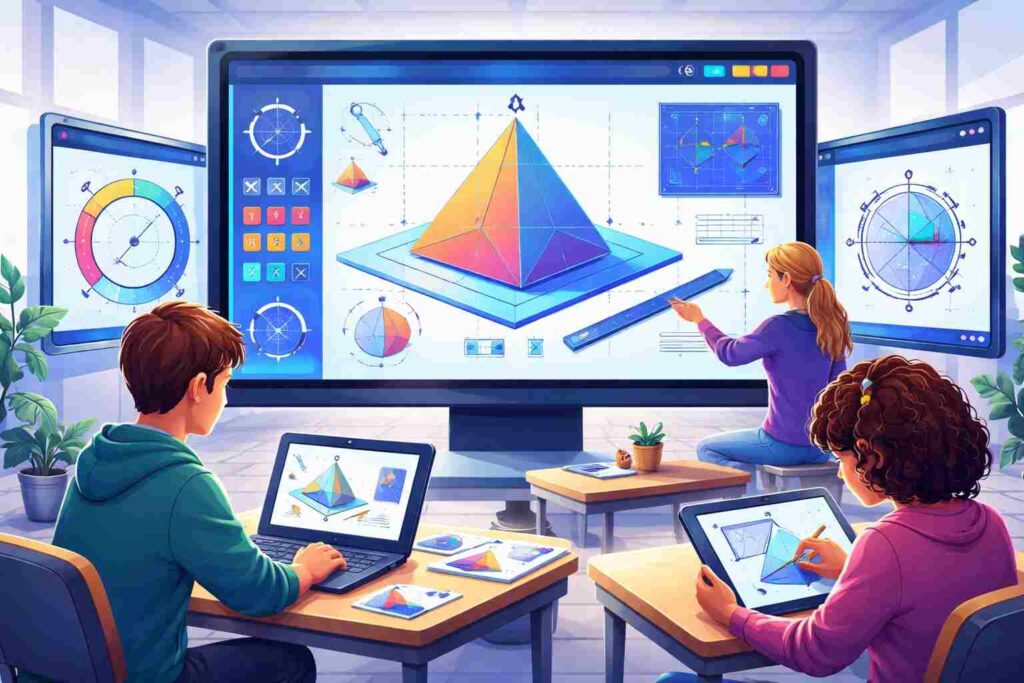
Geometry Learn V3 is attracting attention because it presents geometry as an interactive experience instead of a textbook-only subject. The public V3 page shows a lightweight beta interface under “The GL Series,” and recent coverage describes a broader platform built for visual learning, guided practice, and adaptive support. For students, teachers, and parents, that matters because geometry becomes much easier when learners can see and manipulate ideas instead of only reading about them.
- What Is Geometry Learn V3 — And Why It’s Changing Math Forever
- Inside the Platform: Features That Make Hard Geometry Feel Easy
- From Angles to Algorithms: How V3 Covers Every Advanced Topic
- Why Students Score Higher Using Geometry Learn V3 (With Proof)
- Who Is Geometry Learn V3 Built For? Students, Teachers & Beyond
- Geometry Learn V3 vs. The Rest — There’s No Comparison
- Conclusion
What Is Geometry Learn V3 — And Why It’s Changing Math Forever
Geometry Learn V3 is described as an interactive geometry learning platform focused on shapes, measurements, theorems, proofs, and spatial reasoning. Instead of only reading definitions, learners can manipulate figures, test relationships, and build understanding through direct action. This changes math learning because geometry depends heavily on visualization. Recent coverage also frames the platform as a shift from memorization to exploration, which aligns with how many learners understand difficult concepts more effectively.
Inside the Platform: Features That Make Hard Geometry Feel Easy

Published descriptions of Geometry Learn V3 highlight digital rulers, protractors, compasses, transformation controls, guided modules, built-in assessments, and teacher dashboards. Keeping these tools in one place reduces friction because students do not need separate apps for practice and feedback. Coverage also reports adaptive learning support, meaning lessons can adjust to performance and provide more help or more challenge as needed. That all-in-one structure makes Geometry Learn V3 feel practical and easier to use consistently.
Interactive Tools That Let You See, Touch, and Solve Geometry in Real Time
The strongest value is real-time interaction. Public write-ups repeatedly mention rotating figures, testing congruence, and constructing proofs with responsive manipulatives. When a student changes an angle and immediately sees the figure update, geometry becomes concrete. As a result, visual geometry learning technology supports stronger spatial reasoning and pattern recognition. Students are not only reading what a transformation does; they are watching it happen and verifying it themselves.
From Angles to Algorithms: How V3 Covers Every Advanced Topic
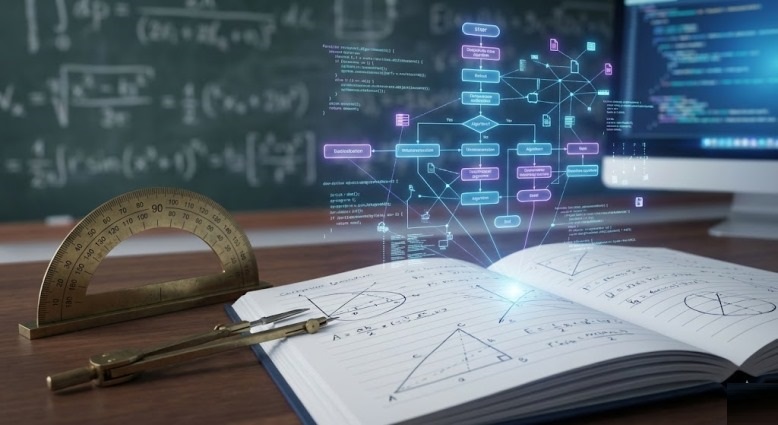
Available sources position geometry learn v3 as more than a basic shapes app. They describe theorem work, measurements, proof logic, 3D modeling, animated transformations, and links between geometric thinking and algebraic reasoning. That range matters because advanced geometry requires both visualization and formal logic. Although the public landing page does not publish a full official syllabus, the repeated descriptions consistently present the platform as suitable for higher-level geometry study and structured math practice.
Why Students Score Higher Using Geometry Learn V3 (With Proof)
Public articles claim stronger engagement, improved theorem comprehension, and better proof accuracy when students use interactive modeling and guided practice. They also describe built-in assessments and analytics dashboards that help teachers track progress and identify misconceptions early. At this stage, that is the clearest public “proof”: a platform design centered on immediate feedback, measurable practice, and visible progress tracking. No independent published study is cited in the available sources, so outcome claims should be treated as platform-reported benefits rather than external research results.
Step-by-Step Visual Learning That Replaces Boring Textbooks
Geometry Learn V3 is consistently described as guided and step by step. That matters because many textbook lessons move too quickly from theorem statements to exercises. A stepwise interactive math platform can show a concept, let the learner test it, and then move into practice with feedback. Therefore, students build understanding in sequence instead of memorizing disconnected rules. The rigor stays intact, but the delivery becomes more visual, active, and easier to retain over time.
Who Is Geometry Learn V3 Built For? Students, Teachers & Beyond
Public descriptions name students, teachers, schools, and independent learners as likely users of Geometry Learn V3. Students get adaptive practice and cross-device access. Teachers get lesson templates, guided activities, and assessment tools. Schools and districts are mentioned because the platform is presented as both an instructional system and an analytics asset. Coverage also lists accessibility features such as screen reader support, contrast controls, and captioned tutorials for inclusive use.
How to Get Started in Minutes — No Setup, No Confusion
The visible V3 page is simple, with direct links to Games, Apps, and Extras plus a beta search area, which supports quick onboarding. Recent coverage also describes cloud syncing, mobile compatibility, and single sign-on style access. Together, these details suggest a low-friction start for classrooms and home learners. Users can begin quickly and continue across devices without rebuilding progress, which supports regular geometry practice and better learning consistency.
Geometry Learn V3 vs. The Rest — There’s No Comparison
Public comparisons place Geometry Learn V3 ahead of textbook-only and static e-learning formats in interactivity, visualization, adaptive support, and real-time feedback. Those differences matter because advanced geometry becomes easier when students can test relationships and see results immediately. A static page shows one example; an interactive platform can generate many. That practical advantage is why Geometry Learn V3 stands out as an advanced interactive math tech platform for modern learning.
Conclusion
Geometry Learn V3: Advanced Interactive Math Tech Platform stands out because it makes geometry visible, interactive, and trackable. The public V3 interface is lightweight, and recent coverage consistently describes a platform built around manipulatives, guided practice, adaptive support, and teacher analytics. Independent research data is not cited in the available sources, but the platform model aligns with what geometry learners need most: clear visuals, real-time feedback, and structured progression. For students and educators looking for a more engaging way to learn geometry, geometry learn v3 is a strong modern option.
Also Read: Your Topics Multiple Stories: Advanced, Data-Driven Content Strategy
