

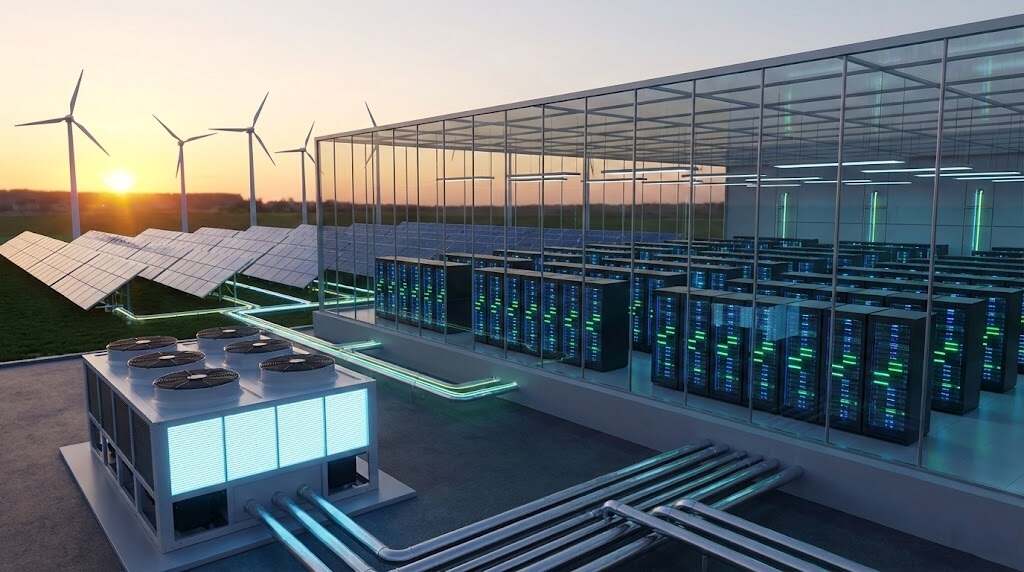
As digital assets have moved to a Proof-of-Work model, the energy footprint of blockchain mining has increased and become a challenge in its own right. The mining facilities run specialized hardware tools around the clock and consume a vast amount of electricity.
This has created a shift in how mining companies source their energy. Integrating green energy into ASIC farming isn’t just a gesture towards those who care about the environmental impact. It’s a long-term business decision that will have an effect on the blockchain industry for years to come.
The Energy Challenge in ASIC Mining
Energy Consumption of ASIC Farms
ASIC farms are made to perform one task: hashing. They do so at maximum efficiency, and therefore, to stay competitive, the farms operate 24/7. Operations often occur in dense clusters of thousands of units. Such an operation consumes several kilowatts of power, and at scale, it is equivalent to running a small factory. Large farms use even more energy and are best compared to small towns when it comes to the power they use. Bitcoin alone consumes over 100 terawatt-hours of electricity annually.
Traditional Power Sources and Their Limitations
Many ASIC farms have relied on grid electricity from fossil fuels due to its availability and reliability. However, CryptoManiaks experts have written about the turn to alternative energy sources that many blockchain companies have made. As traditional energy sources become more expensive, relying on them isn’t just a reputational issue; it’s also an operational liability.
Why Renewables Make Sense for ASIC Mining
Declining Costs and Economic Advantages
The best argument for using renewable energy to mine digital assets is the cost itself. In recent years, the cost of solar and wind power has declined, making them cheaper than conventional power sources. Solar energy now costs less than fossil fuels in many global markets. Since profitability is tied to power costs, renewables offer long-term price stability and therefore predictable operational expenses. Miners also sign fixed-cost power contracts to protect themselves against sudden price spikes.
Environmental and Regulatory Benefits
Beyond the price, there’s also an environmental benefit. Using a renewable energy source reduces the mining company’s carbon footprint. Such an approach eases regulatory pressures, improves access to investors who care about the environment, and supports compliance with regulatory standards. As governments increasingly focus on regulating the blockchain industry, mining will be the most scrutinized, as it has the greatest environmental impact.
Models and Methods of Integration
Behind-the-Meter and Utility-Scale Solar Integration
Some ASIC farms source power directly from nearby solar panels. The energy is transferred to farms before it reaches the grid. This creates value for both blockchain miners and energy producers by using energy that would otherwise be curtailed.
Hydroelectric and Wind Energy Partnerships
In regions rich in renewable resources, miners partner with hydroelectric or wind operators to absorb surplus energy during peak production. The main benefit of this approach is that it helps stabilize the grid while miners get energy at a lower cost than they would in an open market.
Hybrid Power Systems
Many operators adopt a hybrid power system. This allows them to have an uninterrupted power supply. They get power first and foremost from renewable energy sources, but they supplement it with grid power or a gas-powered backup. This approach creates a balance between reliability and sustainability.
Off-Grid and Microgrid Strategies
Off-grid mining powered by dedicated renewable installations and battery storage offers independence from public grids. ASIC farms act as flexible loads, reducing consumption when renewable supply drops and increasing it when surplus energy is available. Miners frequently earn financial credits by shutting down during peak grid stress.
Challenges and Barriers
The challenges common to renewable energy also affect blockchain mining that relies on it. This energy is intermittent by its very nature and requires miners to store it when supply is low. Such an approach requires additional expenses, and it takes time for mining profits to cover them. There’s also an upfront cost of installing renewable energy sources, which can be difficult for a small business to cover.
Regulatory uncertainty is another factor to consider. At this point, the use of alternative energy sources is helped and subsidized by the government. It may not always be the case, as public perception of these efforts changes.
Also Read: XRP Price Prediction & Future Outlook: A Complete Analysis
To Sum Up
The blockchain mining industry is shifting towards renewable energy. It consumes a huge amount of electricity, which is both expensive and harmful to the environment, and the industry is looking for ways to use wind and solar power. It’s more about than just caring about its public image; a move towards these energy sources is also less costly in the long run.
There are many ways to accommodate the shift, and many blockchain mines use a hybrid approach: they switch to an alternative energy source when prices are low, while remaining connected to the grid to avoid power interruptions. As blockchain mining and digital asset usage in general become more common, the industry will have to accommodate and address their negative environmental impacts.
