
Ask ten iPhone owners how to set up Siri and you’ll get ten half-remembered answers — most of them out of date. Apple has shifted the Siri controls twice in two years, shortened the wake phrase, and with iOS 27 this September added an opt-in “Siri AI” beta plus a standalone Siri app. So if you went hunting for a switch labelled “Hey Siri” and came up empty, you’re not imagining things. Here’s the current walkthrough, in the order it appears on a real device — plus the small toggles that decide whether Siri actually answers you.
- First, Check What Your iPhone Model Actually Supports
- How to Turn On Siri in Under Two Minutes
- Voice Recognition Setup — The Step Most People Skip
- Configure Alternate Controls: Side Button, Typing, and Lock Screen
- The Settings Menu Most Guides Never Mention
- What to Do When Siri Stops Responding After Setup
- How to Use Siri Once It’s Listening
- The Bottom Line: Setup Is Easy, Tuning Is What Pays Off
- Frequently Asked Questions
First, Check What Your iPhone Model Actually Supports
Two things shape your menu: your iOS version and your model. On iOS 26 and iOS 27 the controls sit at Settings > Siri, though on some builds the row reads Apple Intelligence & Siri. The option to say just “Siri” rather than the full “Hey Siri” is restricted to supported models, languages and regions, which Apple publishes on its feature-availability page.
If you’re figuring out how to set up Siri on iPhone 16 or how to set up Siri on iPhone 17, both lines run Apple Intelligence, so you’ll see options older handsets never display. One quiet gotcha: Apple Intelligence needs your device language and Siri language to match — change one and the smart features disappear until the new language finishes downloading.
How to Turn On Siri in Under Two Minutes
These steps enable Siri on iPhone models from the SE right up to the 17 Pro Max:
- Go to Settings > Siri (Apple Intelligence & Siri)
- Tap Turn On Siri and follow the prompts. On iOS 27 you’ll also be offered Try Siri AI (Beta).
- Talk & Type to Siri — sometimes referred to as Tap Requests.
- Choose “Siri” or “Hey Siri”. Pick the longer phrase if TV dialogue keeps waking your phone.
- Switch on Press Side Button for Siri as a silent backup.
Generally, individuals who ask on how to activate Siri expect a difficult process. It takes under two minutes.
Voice Recognition Setup — The Step Most People Skip
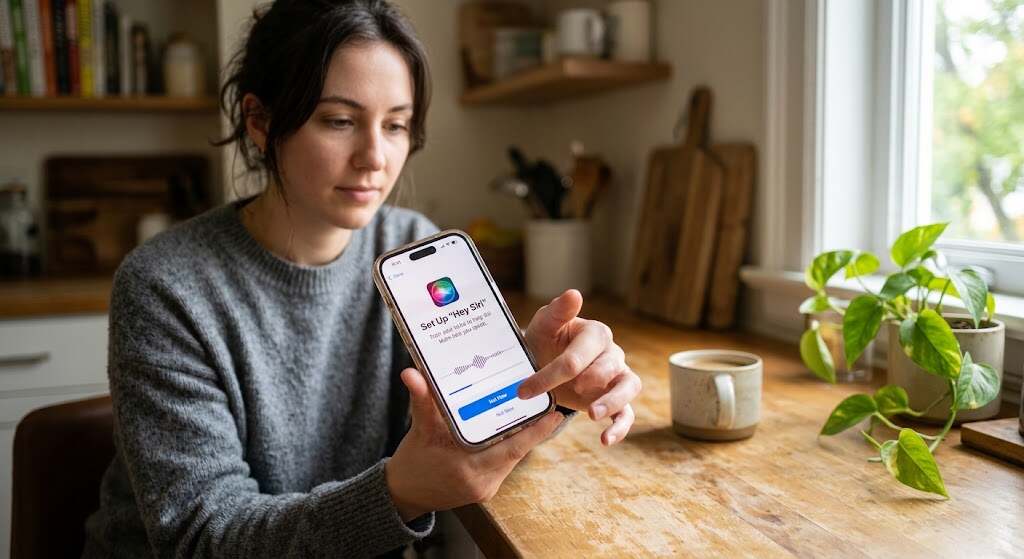
After you enable Siri on iPhone, you’ll be asked to repeat a short series of phrases. Say them at the distance and volume you’ll genuinely use. Train it whispering into the handset at midnight and you’ll be baffled when Siri ignores you from across the kitchen the next morning. To retrain later, toggle “Siri” or “Hey Siri” off, turn it back on, and run the phrases again — that single trick fixes more recognition complaints than any reset.
Configure Alternate Controls: Side Button, Typing, and Lock Screen
Voice fails in open-plan offices and quiet trains, which is why Type to Siri matters. On Apple Intelligence phones, double-tap the bottom edge of the screen; on everything else, go to Settings > Accessibility > Siri > Type to Siri. Then make a deliberate call on Allow Siri When Locked — handy, but it also lets a stranger near your desk fire off a message. Learning how to use Siri silently is genuinely half its value.
The Settings Menu Most Guides Never Mention
Settings > Accessibility > Siri is where the real tuning happens. Always Listen for “Siri” keeps the phone responsive face down or inside a bag. Siri Pause Time (Longer or Longest) stops Siri interrupting you mid-sentence — a real fix for slower speakers. And with English (U.S.) as your language, you can have Siri listen for atypical speech patterns linked to conditions such as ALS, cerebral palsy or stroke.
If your interest is specifically how to set up Siri on iPhone 17 Pro, iOS 27’s Expressive Voices adds Pace and Expressivity sliders, currently limited to iPhone 17 Pro, Pro Max, iPhone Air and the iPhone 18 Pro models, in American and British English first.
What to Do When Siri Stops Responding After Setup
Apple’s own Support Communities show where this falls apart. One poster described Siri suddenly refusing to give the familiar “mm hmm” acknowledgement; they retrained the voice model, reset all settings and restarted the phone before a factory reset finally worked — and their parting advice to the thread was to check Accessibility > Siri > Always Listen first, because a phone lying face down looks identical to a broken Siri. In another long-running thread, an iPhone SE owner could clear step one or two of “Hey Siri” training but never finish it, and noticed voice messages had stopped recording too — a microphone fault wearing a Siri costume.
The practical lesson: if training stalls, record ten seconds in Voice Memos before blaming software. Apple’s official checklist is shorter still — confirm internet access, toggle “Hey Siri” off and on, and make sure Voice Feedback is set to Always Speak Responses.
Also Read: How to use the Apple Passwords app [Ultimate Guide]
How to Use Siri Once It’s Listening
The commands that earn their keep are unglamorous: “Siri, set a 12-minute timer for the pasta.” “Siri, add oat milk to my grocery list.” “Siri, text Dad I’m ten minutes late” — switch on Automatically Send Messages and it skips the confirmation tap. “Siri, hang up” works once Call Hang Up is enabled. You can also chain requests: “What’s the weather in Karachi? What about Lahore?” This is the way one can make use of Siri.
The Bottom Line: Setup Is Easy, Tuning Is What Pays Off
Here’s the honest summary after walking the menus: the hard part was never how to set up Siri — it’s the five minutes afterwards that nobody spends. Train the voice model properly, at the distance you actually speak. Decide whether Siri answers on a locked screen. Stretch the pause time if you think before you finish sentences. Add Type to Siri so the assistant survives a quiet room.
Whether you’re following how to set up Siri on iPhone 17, revisiting how to set up Siri on iPhone 16, or reviving a three-year-old handset, those choices are the difference between an assistant you use daily and one you disable in a week. Give it one afternoon of attention, then judge it — and if it still fails, test the microphone before you factory reset. That single check has saved a lot of people a very long evening.
Frequently Asked Questions
1. Why can’t I find “Hey Siri” anywhere in Settings?
Because it moved. Look under Settings > Siri > Requests, or Apple Intelligence & Siri > Talk & Type to Siri on newer builds.
2. Is how to set up Siri on iPhone 16 any different from older models?
The core steps are identical. The difference is what comes after: Apple Intelligence phones unlock Type to Siri by default and are eligible for the Siri AI beta on iOS 27.
3. Does Siri work without an internet connection?
Barely. Apple states an internet connection is required; offline, you’ll usually hear “I’m having trouble with the connection.”
4. Siri keeps triggering when nobody called it. Fix?
Switch from “Siri” to the full “Hey Siri”, turn off Always Listen, or simply place the phone face down — Apple’s own documented trick.
5. Should I turn on Siri AI right away?
It’s a beta: English first, not initially available in the EU, and subject to daily usage limits on server-based requests. Enable it if you like testing; keep classic Siri if you depend on reliability.
